A No. 2 on the sides. It is one of the most common sentences spoken in a barber shop, and a surprising number of the men saying it could not tell you what the 2 measures. Guard numbers are not a scale of style or severity. They are lengths, in eighths of an inch, and once you know the scale, a whole conversation in the chair becomes precise. You can repeat a cut exactly, adjust it deliberately, and understand what your barber is proposing before the clippers start.
Ignoring those numbers has a slow cost. Men guess, get a cut shorter or longer than they picture, live with it for weeks, then guess again next visit in different words. At Rhino Barbers in Rockwell, the men with the most consistent cuts are rarely the most particular. They are simply the ones who know their numbers.
The scale itself
The system is tidy. Each guard number equals that many eighths of an inch. A No. 1 leaves about an eighth of an inch, a No. 2 a quarter inch, a No. 3 three-eighths, a No. 4 half an inch, and so on up to a No. 8 at a full inch. Below the guards sits bare clipper work: a zero is the blade with no guard, leaving very short stubble, and a skin fade takes that zone down cleanly to skin at its lowest point.
Barbers also work between the numbers. Clipper levers adjust the blade through half-steps, and blending guards fill gaps, so a barber describing a 2 blended into a 4 is building a slope rather than two shelves. You do not need to direct that detail. You need the anchors: the shortest number you want, and the longest.
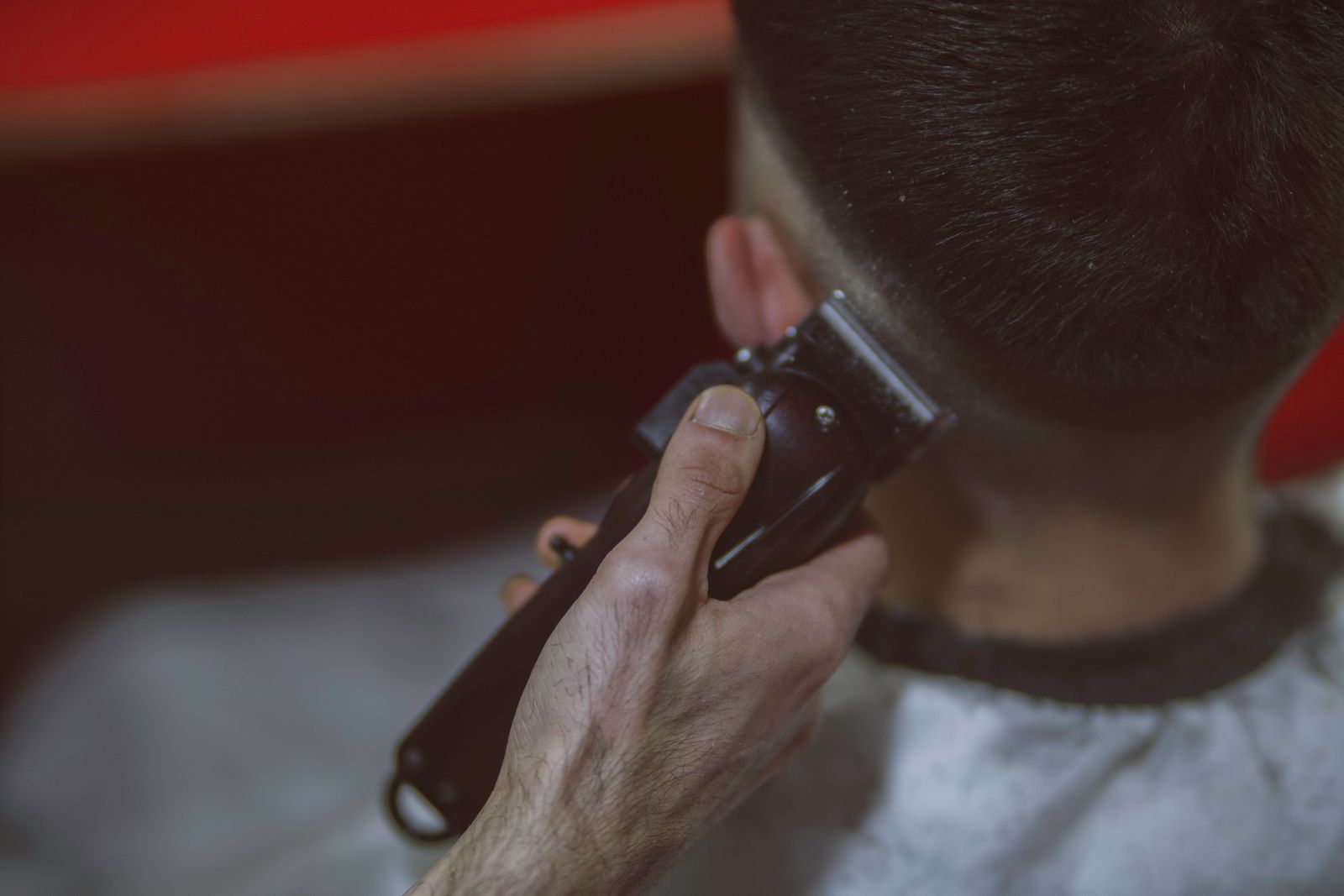
Why the same number looks different on different heads
A No. 3 is a measurement, not an appearance. On thick, dark, straight hair it reads full and tidy. On fine or light hair, the same length shows more scalp and reads shorter. Curly hair at a 3 springs up and looks shorter still once dry, while very straight hair lies down and looks longer. Head shape matters too: a guard follows the skull, so ridges and hollows all get the same length but not the same look.
This is why copying a friend's numbers wholesale can disappoint. His 2 is not your 2 in visual terms. Use numbers as your own record across your own visits. Once a barber has hit a length you like, note the guards used, top and sides separately, and that record becomes the most reliable sentence you can bring to any chair in any town.
The cost of not knowing, in grow-out terms
Neglect here is not dramatic. It is a slow accumulation of slightly wrong cuts. Ask too short because you misremembered a number, and you spend two weeks waiting for coverage to return, possibly through an event or a photo you cared about. Ask too long, and the shape you wanted never appears, so you compensate with product and daily effort the cut was supposed to remove. Repeat the guessing across a year and you have spent most of it in haircuts that were near misses.
The vague-request problem compounds with a new barber. A regular who knows your head can rescue an instruction like the usual. A stranger cannot. One visit where you learn your numbers ends the cycle permanently, and it takes about ten seconds: as the cut ends, ask what guard was used on the sides, what was left on top, and whether anything between them was a blend. Type it into your phone while you are still in the chair.

Useful combinations to know by name
A few pairings cover most clipper cuts. A 2 on the sides with a 4 or scissor length on top is the balanced short cut that suits many heads and grows out kindly. A 1 fading up into a 3 gives a sharper, higher-contrast look that needs more frequent visits. A 4 all over is the gentle buzz for a man who wants minimal hair without severity, and a 3 all over is its bolder sibling. A zero or skin at the bottom of a fade is never a whole cut by itself; it is the foundation a blend is built on, and it comes with the shortest maintenance window of anything in the shop.
When in doubt between two numbers, choose the longer one. A barber can take a 4 down to a 3 in the same visit in a few minutes. The reverse takes a fortnight of waiting, and no product, hat strategy, or optimism changes that arithmetic.
Common questions
What does a No. 2 actually leave on the sides?
About a quarter of an inch of hair. Guard numbers run in eighths of an inch, so the number divided by eight gives the length the guard leaves.
Is a zero the same as a skin fade?
Not quite. A zero is the bare clipper blade with no guard, leaving very short stubble. A skin fade is a blend that reaches skin at its lowest point, usually finished with closer tools.
Why did my usual number look shorter this time?
Texture, color, curl, and even recent growth all change how a fixed length reads. A new barber's blending can also shift the impression, which is why noting top and side numbers separately helps.
Photos in this guide are representative stock images.
← All guides from Rhino Barbers← Back to Rhino Barbers