Fade and taper are the two most requested words in a barber shop and the two most often used to mean the same thing, which they are not. A man asks for a taper, pictures a fade, and gets a perfectly good taper he did not want. Or the reverse. The confusion is understandable, because both involve hair getting shorter toward the bottom. The difference is how far that shortness goes, and how much of the head it covers.
Getting the words right matters more in some seasons than others in Rockwell. Piedmont summers push men toward fades for airflow and easy upkeep, while fall and winter favor the softer finish of a taper under hats and collars. This guide defines both plainly, then gives you the exact sentences to use in the chair.
The definitions, without the fog
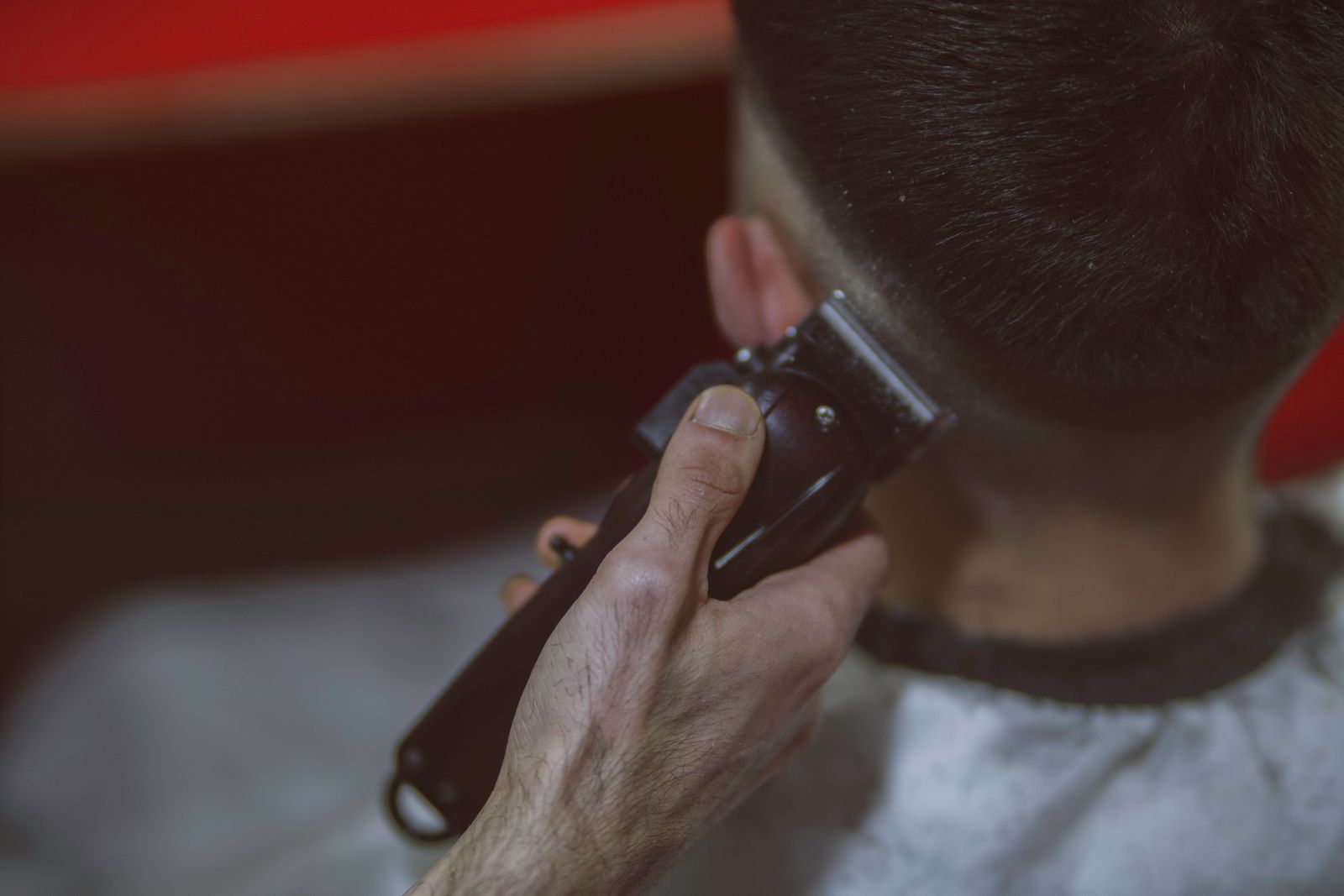
A fade blends the hair down to very short, often to bare skin, over a large part of the sides and back. The transition from long to almost nothing happens across a zone, and where that zone sits gives the fade its name: a low fade stays near the bottom, a mid fade rises to around the temples, and a high fade starts up near where the sides meet the top. A skin fade goes all the way to skin at the bottom. A fade is a bold, visible technique. You can see the gradient from across the room.
A taper also shortens toward the bottom, but only at the edges: around the ears, the sideburns, and the neckline. The bulk of the sides keeps real length, often scissor-cut, and the hair graduates neatly just at the perimeter. A taper is a finish rather than a transformation. It looks like a classic haircut that has been cleaned up at the edges, because that is exactly what it is.
The seasonal checklist for choosing
Choosing by season and situation
- Peak summer heat: a fade, low or mid, removes bulk where sweat gathers and keeps its shape between closer-spaced cuts.
- Outdoor work in any season: a fade suits hard hats and heat, but remember a fresh high fade exposes more scalp to sun, so a hat and sunscreen still apply.
- Fall and winter: a taper leaves enough length to sit well under knit hats and collars, and its soft edge grows out gracefully through the holidays.
- Formal events and conservative workplaces: a taper or a low fade reads as neat without drawing attention to the technique.
- Fast-growing hair or a loose budget of time: a taper forgives an extra week between cuts; a skin fade announces every day past its prime.
- Thinning or receding hair: a fade's short sides restore proportion to the top, while a taper keeps things classic if coverage is still good.
- First time trying either: start with a low fade or a taper, live with it for one cycle, then decide whether to go bolder.
The words to use in the chair
For a fade, name three things: how high, how short, and what happens on top. For example: a mid fade, down to skin at the bottom, with a couple of inches left on top to comb to the side. That sentence gives a barber at Rhino Barbers everything needed. If you do not want skin, say the guard instead: a low fade to a No. 1 at the shortest. Numbers end arguments that adjectives start.
For a taper, say what stays. A classic scissor cut on the sides, tapered just at the ears and neck, nothing taken to skin. If you want the neckline a particular way, squared, rounded, or left natural and faded out, say so now rather than at the mirror check. A photo helps with either request, but treat it as a starting point. Your barber may point out that the model fade sits higher or that your growth pattern will move the blend, and that adjustment is the consultation doing its job.
How each one grows out
This is where the choice becomes a lifestyle question. A fade, especially to skin, has a sharp prime of about two weeks. Then the shortest zone grows in as stubble, the gradient softens, and by week three or four it reads as a short haircut that used to be a fade. A taper degrades gently. The edges fuzz, the outline softens, but the overall shape holds for four to six weeks, which is why tapers suit men who cannot or will not visit every fortnight.
Neither grow-out is a defect. They are schedules wearing different clothes. Choose the one whose maintenance rhythm matches the rest of your life, and the cut will still look like a decision at week three instead of a deadline you missed.
Common questions
Is a taper just a low fade?
No. A low fade still blends a large area of the sides down very short. A taper shortens only the edges around the ears, sideburns, and neckline, leaving the sides with real length.
Which looks more professional?
Both can. A taper and a low fade read as the most conservative. High and skin fades are sharper and more conspicuous, which suits some workplaces and not others.
Can I switch from a taper to a fade in one visit?
Yes, going shorter is always possible in the same appointment. Going the other way takes a grow-out period, so if you are unsure, start with the taper and decide next visit.
Photos in this guide are representative stock images.
← All guides from Rhino Barbers← Back to Rhino Barbers