A beard rarely looks bad on the day it is trimmed. It looks bad on day twelve, when the neckline has crept, the cheeks have fuzzed, and the shape the barber built has quietly dissolved into general growth. If you are new to keeping a beard rather than just having one happen to you, the skill that matters is not trimming. It is cadence: knowing what to touch, how often, and what to leave alone until you are back in a chair in Rockwell.
Beards grow at roughly the same pace as scalp hair, about half an inch a month, but they announce growth sooner because a beard is a shape with edges. This first-timer's walkthrough follows one full cycle, from the day of a professional trim to the day the next one is due.
Days one to three: do almost nothing
Right after a barber trim at Rhino Barbers, your only jobs are washing and restraint. Wash the beard with water daily and a gentle cleanser or beard wash a few times a week; ordinary shampoo works in a pinch but can dry the coarser beard hair and the skin under it. Pat it dry, comb it down into its shape while damp, and leave it alone. The most common beginner error happens in this window: studying the fresh trim in a magnifying mirror, spotting one uneven hair, and starting a correction session that ends with the whole beard shorter and lopsided.
Look at the beard the barber gave you and memorize its architecture instead. Where does the cheek line run? Where exactly does the neckline sit? Those two lines are your map for the next three weeks.

Week one to two: the neckline and cheeks only
- Re-establish the neckline. The standard rule: place two fingers above your Adam's apple, and the neckline sits around the top finger, curving up toward the ears. Shave below the line you were given, not a new one of your own invention.
- Clean the cheeks sparingly. Remove only the stray hairs above the cheek line the barber set. Do not lower the line chasing strays, or the beard gets thinner and lower with every session.
- Comb before you judge. Beard hair crosses and lies in odd directions after sleep. Comb it into shape first; half the hairs you were about to cut are innocent.
- Trim flyaways, not length. With small scissors, snip individual hairs that stick out well beyond the surface. Do not run clippers over the whole beard between visits unless you and your barber agreed on a guard number for exactly that.
- Keep the mustache off the lip. A small trim along the lip line is legitimate upkeep. Take tiny amounts; mustache hair is slow to forgive an ambitious snip.
- Moisturize the skin underneath. A little beard oil or plain moisturizer worked to the skin prevents the itch and flaking that make men shave off a good beard in week three.
Week three to four: knowing the limit
Somewhere in this window, home upkeep stops being enough. The bulk through the sides has grown enough to change the beard's outline, making the face look wider. The length under the chin no longer matches the cheeks. The shape needs rebuilding, not tidying, and rebuilding is barber work: guards, blending, and a view of your face from angles you cannot see in a bathroom mirror.
That interval, roughly every three to four weeks, is the standard professional cadence for a shaped beard. Short, tight beards and stubble styles need it sooner, around every two weeks, because a little growth is a large percentage of the whole. Longer beards can stretch to four or five weeks if you are disciplined about the neckline and flyaways. What does not work is the popular plan of trimming everything at home for months and expecting the barber's original shape to persist underneath. Shapes are perishable.
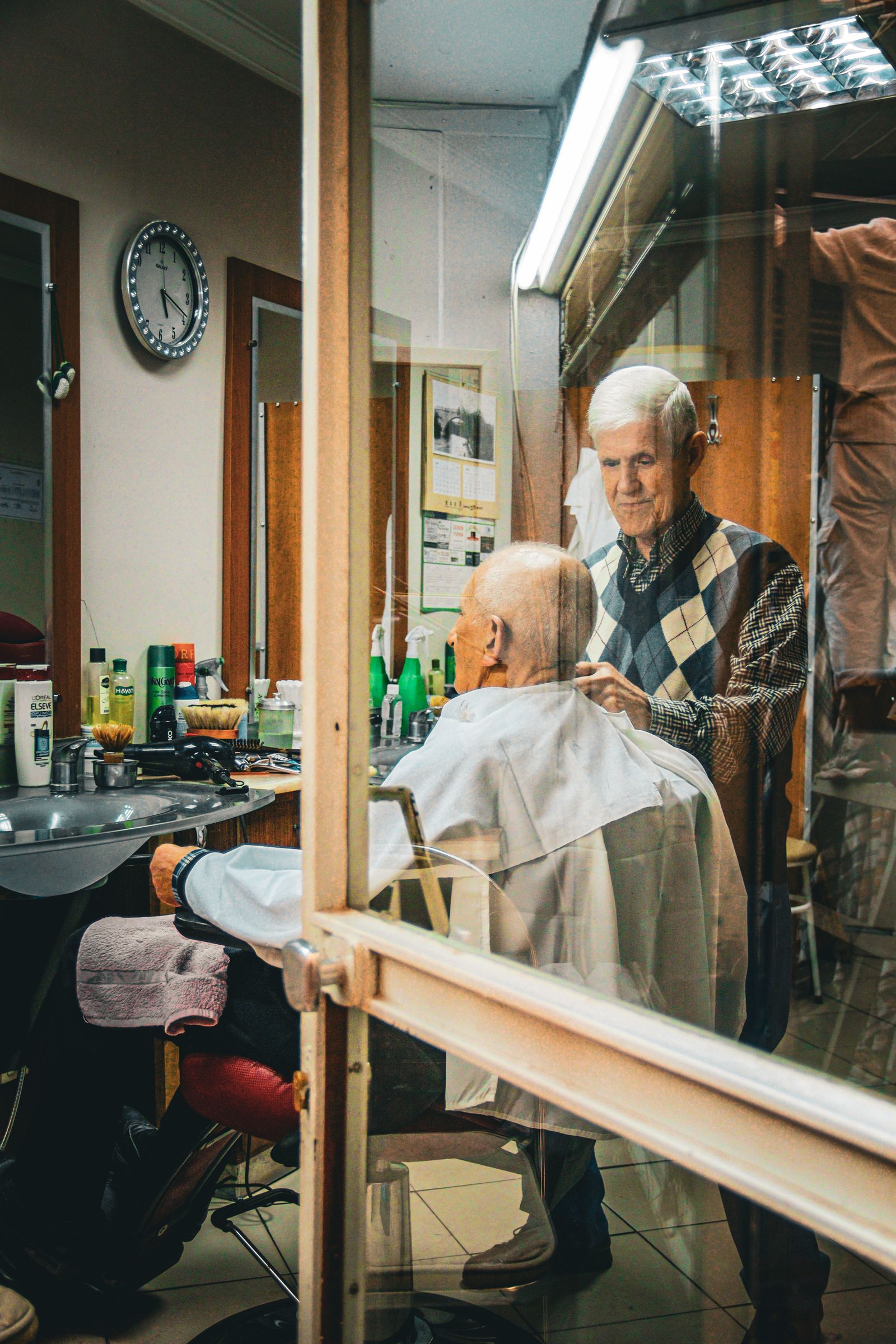
When home trimming goes wrong
The failures follow patterns. A neckline set too high, up near the jaw, makes a beard look like a chin strap and shrinks it from underneath. The fix is patience: stop shaving that high, let the boundary grow back down over a few weeks, and have the barber reset it. Cheek lines get chased downward the same way. And the symmetrical trap catches everyone once: evening one side, then the other, then the first again, losing length with every pass. If you catch yourself in that loop, put the scissors down mid-beard and book a trim. A barber correcting a slightly uneven beard is easy. Correcting a beard that has been chased down to stubble is a regrow.
Common questions
How fast does a beard actually grow?
About half an inch a month for most men, similar to scalp hair. It feels faster because a beard's edges and shape show small amounts of growth quickly.
Where should my neckline be?
Around two fingers above the Adam's apple, curving gently up toward the ears. Much higher looks like a strap, much lower looks untidy, and your barber can set it precisely once.
Can I maintain a beard entirely at home?
You can maintain edges and strays at home, and many men do the rest themselves too. A professional trim every few weeks keeps the underlying shape honest in a way home mirrors make difficult.
Photos in this guide are representative stock images.
← All guides from Rhino Barbers← Back to Rhino Barbers