A first haircut is a small event that adults remember and the child mostly does not, which is worth keeping in mind when planning one in Rockwell. There is no official age, no certificate-worthy right moment, and no prize for doing it early. There is only hair that has grown long enough to bother the child or the parent, and a visit that goes well when it is timed, prepared, and kept short.
This how-to is for parents of toddlers and young kids heading toward a first proper cut, whether at Rhino Barbers or anywhere else. It covers when children are ready, what the appointment actually looks like, and exactly which parts you can make easier from home.
When is a child ready?
Readiness has less to do with age than with three practical tests. First, the hair itself: is it in the child's eyes, tangling into knots at the back, curling over the ears in a way that annoys them, or uneven enough that a tidy-up would genuinely help? Baby hair grows in patches, and many toddlers wear a mostly bald front and a long back for months. Trimming the untidy parts is reason enough.
Second, can the child sit on a lap or in a chair, reasonably content, for ten to fifteen minutes with a distraction? That is the real gate. Third, how do they handle strangers and noise? A child who is fine with new people will likely take a haircut in stride. A shy child may need a warm-up visit first, and that is a legitimate plan rather than a delay tactic.
Age ranges are only a rough guide. Many first cuts happen somewhere between the first and third birthdays, some earlier for fast-growing hair, some later for slow. Anyone who tells you a firm deadline is selling certainty that does not exist.
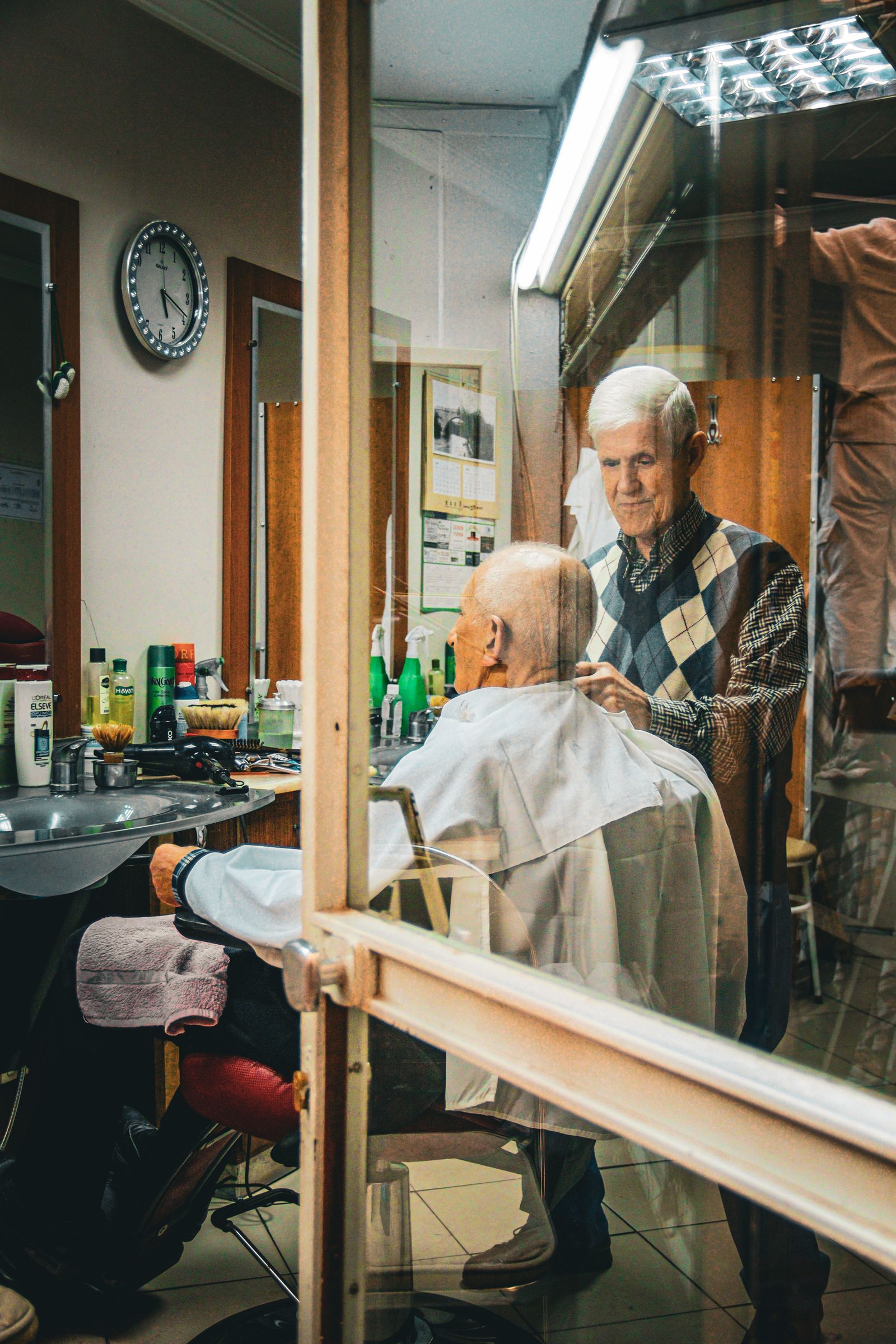
Preparing at home, where you can actually help
- Talk about it plainly in advance. A haircut makes hair shorter, the clippers buzz and tickle, and it does not hurt. Say it a few times over a couple of days, without building it into a major production.
- Play barber if your child likes pretend play. A comb, a towel for a cape, and a turn being the customer makes the real sequence familiar. Swap roles and let them do yours.
- Pick the right hour. Book or go in when your child is fed, rested, and at their best, usually mid-morning. Avoid nap edges, lunch hunger, and the end of a long day.
- Bring the comfort kit. A favorite small toy, a snack for afterward, and a change of shirt for the itchy-hair ride home. A phone video is a perfectly good chair distraction.
- Wash the hair that morning. Clean, detangled hair cuts faster, and speed is kindness with a toddler. Work out knots at home with conditioner rather than in the chair.
- Decide the cut between the adults beforehand. Length, fringe, how much is coming off. The chair is the wrong venue for a parental disagreement conducted in whispers the child can hear.
What the visit itself looks like
Expect flexibility. Many young children get their first cut sitting on a parent's lap rather than alone in the big chair, and a good barber will suggest it before you have to ask. Scissors usually come before clippers, since they are quiet; clippers get introduced briefly, sometimes demonstrated on a hand so the child feels the buzz is a tickle, not a threat. The barber works in short bursts, checks in often, and prioritizes the front and sides, so that if the visit ends early the child still leaves with a presentable cut.
It may not be a complete, perfect haircut, and that is acceptable. A calm, slightly unfinished first cut builds a child who cooperates fully by the third visit. A forced, complete cut through tears can build a child who fights haircuts for years. Barbers who cut kids will choose the first outcome every time, and parents should let them.
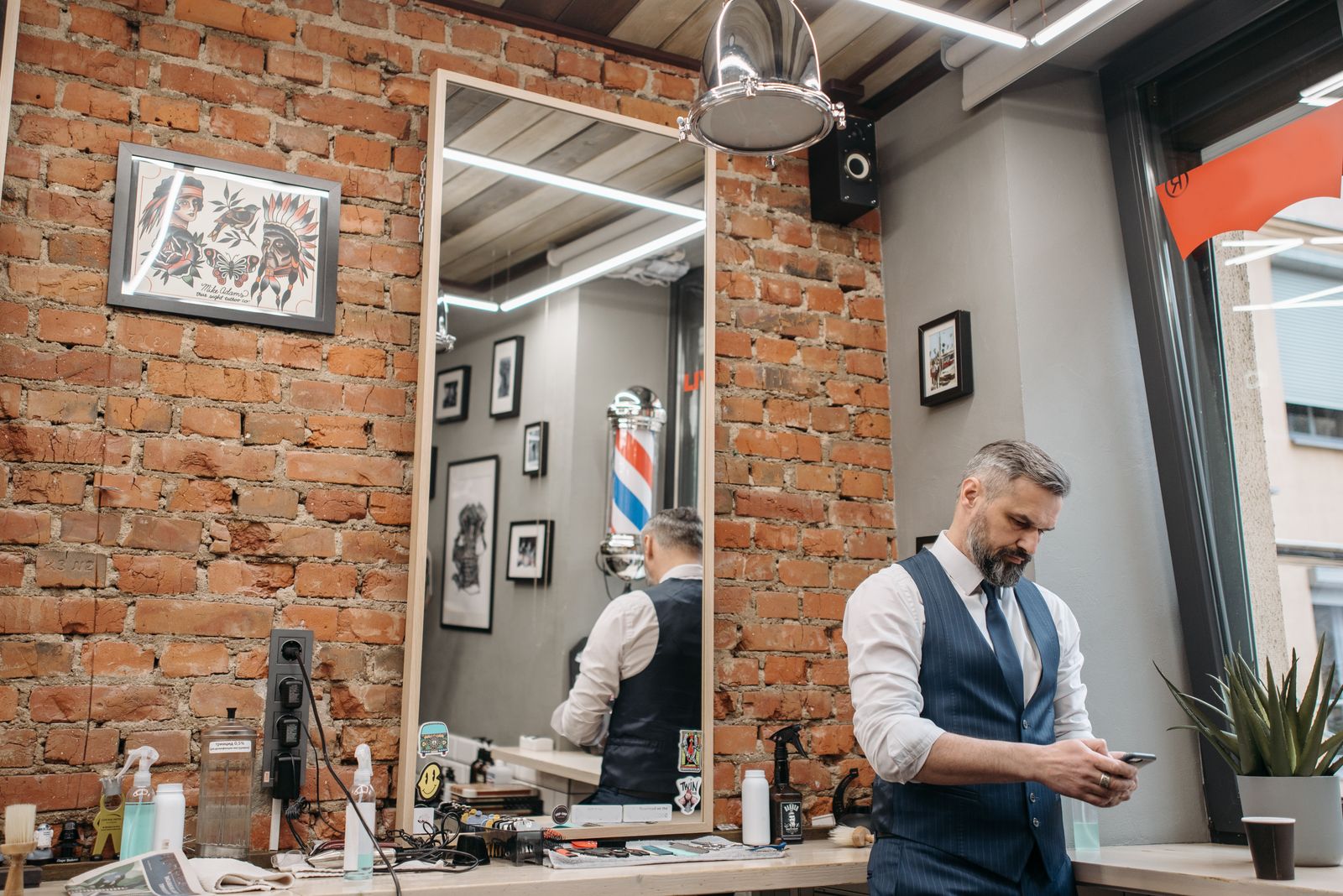
Where the professional line is
Trimming a fringe or tidying one wild patch at home is within most parents' reach, with small scissors, a calm child, and modest ambitions. A full first cut is different. Children move suddenly and without warning, and cutting around ears, at the neckline, or with clippers near a wriggling head is where home attempts produce the nicks and lopsided results that end up in family stories. Professionals are not just faster; they are trained to cut a moving target safely, and they will stop mid-cut without hesitation when a child lunges, which is the instinct that matters most.
After the visit, note what worked: the time of day, lap or chair, scissors or clippers, which distraction carried the day. The second haircut, usually needed in four to eight weeks depending on the style and growth, goes better when it repeats the first one's winning conditions rather than starting the experiment over.
Common questions
Will a first haircut change my child's hair texture?
No. Cutting does not change how hair grows from the follicle. Baby hair is often replaced by coarser growth over time regardless, which can make it seem as if the cut caused it.
What if my child cries or refuses on the day?
Stop and reschedule. A short, unfinished attempt that ends calmly is far better than forcing a full cut, and barbers who work with kids expect the occasional retry.
Should I save a lock of hair from the first cut?
If you would like to, ask the barber at the start. It takes a few seconds to set a small lock aside, and it is much harder to arrange once the hair is swept up.
Photos in this guide are representative stock images.
← All guides from Rhino Barbers← Back to Rhino Barbers